HW 2: Source Separation
Instructions
- All assignments must be completed on your own. You are welcome to exchange ideas with your peers, but this should be in the form of concepts and discussion, not in the form of writing and code.
- Provide proper citations/references for any external resources you use in your writing and code.
- Late submissions will be accepted for up to a week with 1 point deducted per day.
Moises
Moises is an AI-powered suite for music makers to learn, practice, produce, and collaborate. With the Moises Educator’s Pilot Program, all enrolled students have access to Moises Pro until Summer 2026. Please register here.
- Use your U-M email (@umich.edu)
- Sign up using a desktop browser
- Ignore the prompt to upgrade your account
Q1: Music Source Separation (3pt)
Find the track separation feature at the left navigation bar.
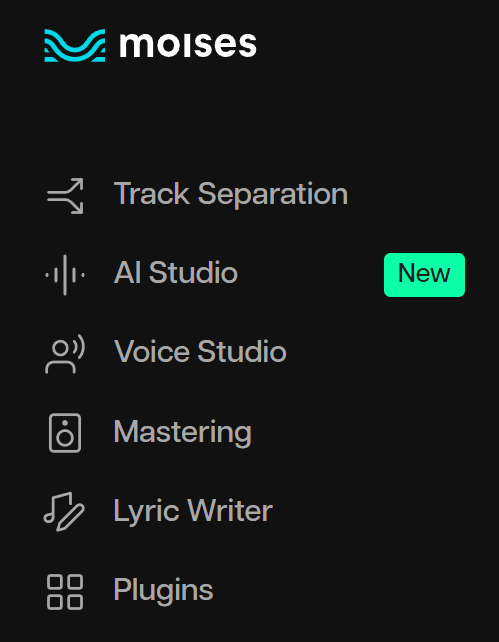
Pick a song you like and separate it using Moises’ track separation feature. Choose the separation targets according to the song you select.
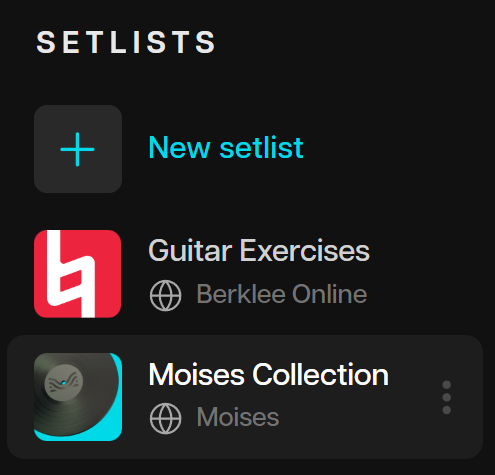
For copyright-safe music, you can find CC-licensed music on Jamendo, such as Like Before by Bessonn&sa and Only Drums Jazzy Hip-Hop by Oleg Silukov. You can also find several demo songs provided by Moises at “Setlists > Moises Collection”:
- Q1.1: Upload the input mixture and one of the separated tracks that you find interesting (either positive or negative) as MP3/WAV files. (1pt)
- Q1.2: What did you find interesting about the selected track? (1pt)
- Q1.3: What are some applications of a source separation model? Who might want to use these features? (1pt)
Q2: Source Separation for Different Ensembles (2pt)
For each of the following ensemble/scenario, name the potential output stems for source separation (note that there is no single correct answer here):
- Q2.1: A string quartet
- Q2.2: An orchestra
- Q2.3: A piano concerto
- Q2.4: A mixed choir
- Q2.5: A contemporary a cappella group
- Q2.6: A pop music band
- Q2.7: A pop song featuring a duet
- Q2.8: Karaoke track production